

Why Drainage Is the Difference Between Thriving and Rotting
If you have ever lifted a houseplant from its pot to find a soft, brown, faintly sour-smelling root ball, you have met the enemy that drainage is designed to defeat. Plant roots need two things from compost: moisture and air. When a pot holds water in its base for days on end, the air pockets collapse, the roots suffocate, and the conditions are set for root rot and the fungal problems that follow. The plant rarely dies overnight. Instead it sulks, drops lower leaves, and slowly gives up.
Getting the pot right is the simplest, cheapest piece of plant care you can invest in. A well-drained pot gives you a safety net against the most common mistake in indoor gardening: loving your plants a little too enthusiastically with the watering can.
What a Properly Drained Pot Actually Looks Like
Not every pot sold as a "planter" is intended to hold a plant directly. Many are decorative outer sleeves, sealed at the base. Before you buy, turn the pot over and check.
- At least one drainage hole, ideally two or three, each around 1–2cm across for a medium pot. A single tiny pinhole is not enough.
- A raised foot or rim so the base does not sit flush against a saucer or windowsill, trapping water underneath.
- No sealed glaze across the inside base, which quietly turns a lovely ceramic pot into a bucket.
- Enough depth that the hole is not immediately blocked by a dense root ball or compacted compost.
One myth worth retiring: a layer of gravel or broken crocks in the bottom of a pot does not improve drainage. It raises the saturated zone higher into the pot, which is exactly where you do not want it. Use one layer of mesh or a coffee filter over the hole to stop compost escaping, then fill with compost and nothing else.
Materials That Let Roots Breathe
Drainage holes are essential, but the material matters too. The best pots are slightly porous, allowing moisture to evaporate through the sides as well as draining down.
- Terracotta and unglazed ceramic: the classic choice. They wick moisture away from the compost, which suits cacti, succulents, herbs, citrus and anything prone to rot. The trade-off is faster drying, so check more often.
- Fabric grow pots: excellent airflow, and roots that reach the edge are air-pruned rather than circling. Ideal for large specimens and plants that resent soggy feet.
- Glazed ceramic and plastic: perfectly workable if they have proper holes. They hold moisture longer, so use a lighter, grittier compost mix and water less often.
- Wooden slatted planters: charming and breathable, though they dry out quickly and need a liner if you keep them indoors.
Whatever you choose, match the material to the plant. A fern in terracotta in a warm room may need watering every other day; the same fern in plastic might be happy once a week.
Cachepots, Saucers and the Double-Pot Trick
The prettiest solution for a plant that needs drainage is also the most practical. Keep the plant in a modest, well-holed nursery pot, then stand that inside a decorative cachepot. Lift it out to water over the sink, let it drain thoroughly, and return it once it has stopped dripping. The cachepot never fills with stagnant water, and you never have to compromise on style.
If you prefer to water in place, always use a saucer and empty it within twenty or thirty minutes. Standing water is not a reservoir, it is a breeding ground for fungus gnats and rot. For plants that enjoy humidity, such as calatheas and ferns, a saucer of damp pebbles beside the pot gives you the moisture without the soaking.
Choosing the Right Size, and Repotting with Drainage in Mind
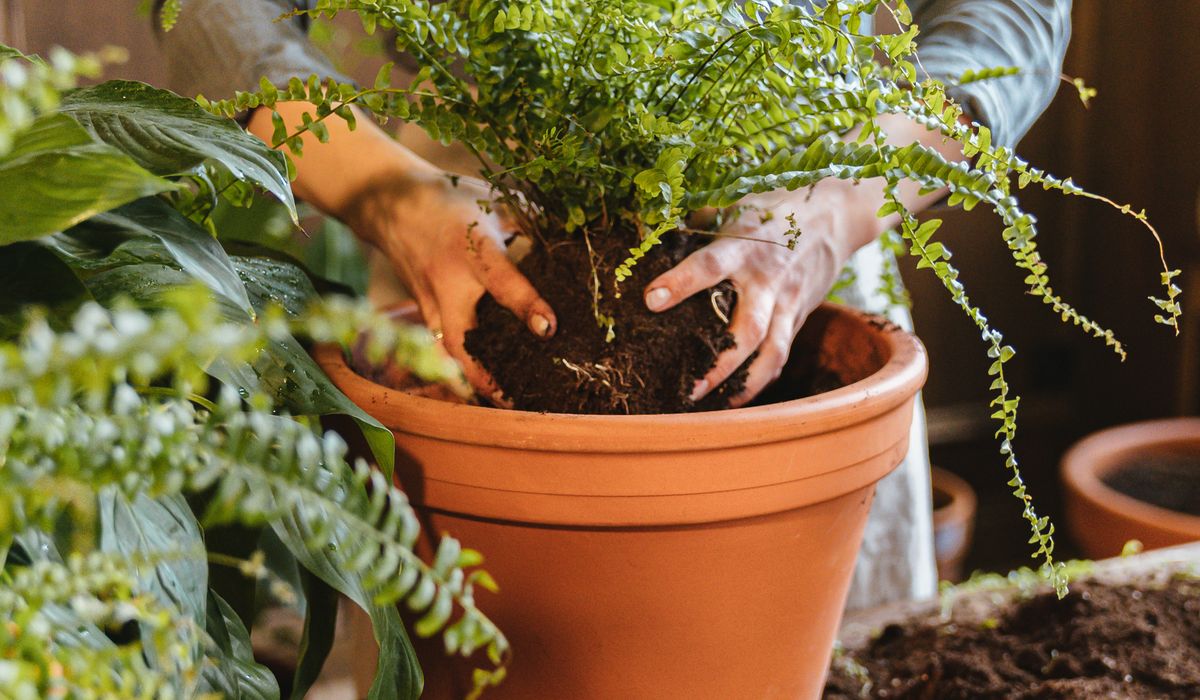
An oversized pot is a hidden drainage problem. A small root system in a large volume of compost cannot drink the moisture fast enough, so the middle stays wet for weeks. Move up gradually, ideally a pot 2–4cm wider in diameter than the current one, or roughly two finger-widths of clearance around the root ball.
When repotting, tease out circling roots, trim any that are mushy or black with clean secateurs, and shake off old, sour compost. Fresh compost with added perlite or horticultural grit, roughly one part grit to three parts compost, gives you drainage inside the pot as well as out of it. Water lightly after repotting and keep the plant out of strong direct sun for a week or so.
Watering Well Once Drainage Is Sorted
Good drainage buys you forgiveness, not immunity. Water thoroughly until it runs from the holes, then wait until the top two or three centimetres of compost feel dry before watering again. Push a finger in, or use a simple moisture meter if you prefer. In winter, cut back dramatically; most houseplants use a fraction of the water they drink in summer.
Watch for the early warning signs: yellowing lower leaves, a sour smell from the compost, mould on the surface, or a cloud of tiny flies. All of them point to compost that is staying wet for too long. Check the hole is not blocked, move the plant somewhere brighter and airier, and ease off the watering can. With the right pot beneath them, healthy roots will do the rest.



John Doe
14 January, 2022Having no content in post should have adverse..
Chauffina Carr
10 April, 2022We use these tests all time! Killer stuff!
Jim Séchen
16 July, 2022Thanks for all the comments, everyone!