

Little Black Flies on the Windowsill
You water a favourite fern, step back, and a small cloud of dark flies rises from the compost. They drift about the room, land on the rim of your mug, and settle back onto the soil a few minutes later. These are fungus gnats, sometimes called sciarid flies, and almost every indoor gardener meets them eventually. They are roughly three millimetres long, dark-bodied, and weak fliers, which is why they tend to hover rather than zoom about the room.
The adults are harmless to you and your furniture. The trouble is what they leave behind. A single female can lay well over a hundred eggs in the top few centimetres of moist compost, and the larvae that hatch are fond of fungi, algae and soft decaying organic matter. On young seedlings, cuttings and tender-rooted plants, they will also nibble at fine roots, which can slow growth or cause a plant to sulk for weeks. They are rarely fatal on their own, but they are a clear signal that something about your watering is off.
Understanding the Life Cycle
Breaking an infestation means interrupting the cycle, so it helps to know the timetable. Eggs hatch in roughly three to six days. The larvae are tiny, clear-to-white, thread-like, and live in the top couple of centimetres of compost for around two weeks. They then pupate, and new adults emerge to start again. At normal room temperature the whole cycle takes about three to four weeks, and considerably less in a warm summer room or above a radiator.
The important detail is where it all happens: the surface layer. Keep that dry and you have removed the nursery. Keep it permanently damp and you are running a breeding programme.
Why Wet Compost Is the Real Problem
Overwatering is behind the vast majority of gnat problems. Compost that stays soggy at the surface supports the algae, moulds and fungi the larvae feed on, and it also stays warm and humid — perfect conditions for development. Several habits make it worse:
- Watering on a fixed weekly schedule rather than checking whether the plant actually needs it.
- Leaving water standing in saucers or in a decorative outer pot, so the base of the compost never drains properly.
- Pots with no drainage holes, or holes blocked by a tightly packed layer of gravel.
- Rich, peat-free mixes with plenty of coir or wood fibre, which hold moisture well and can arrive already carrying eggs.
- Plants in low light, which use far less water than you might expect.
Step One: Let the Top Layer Dry Out
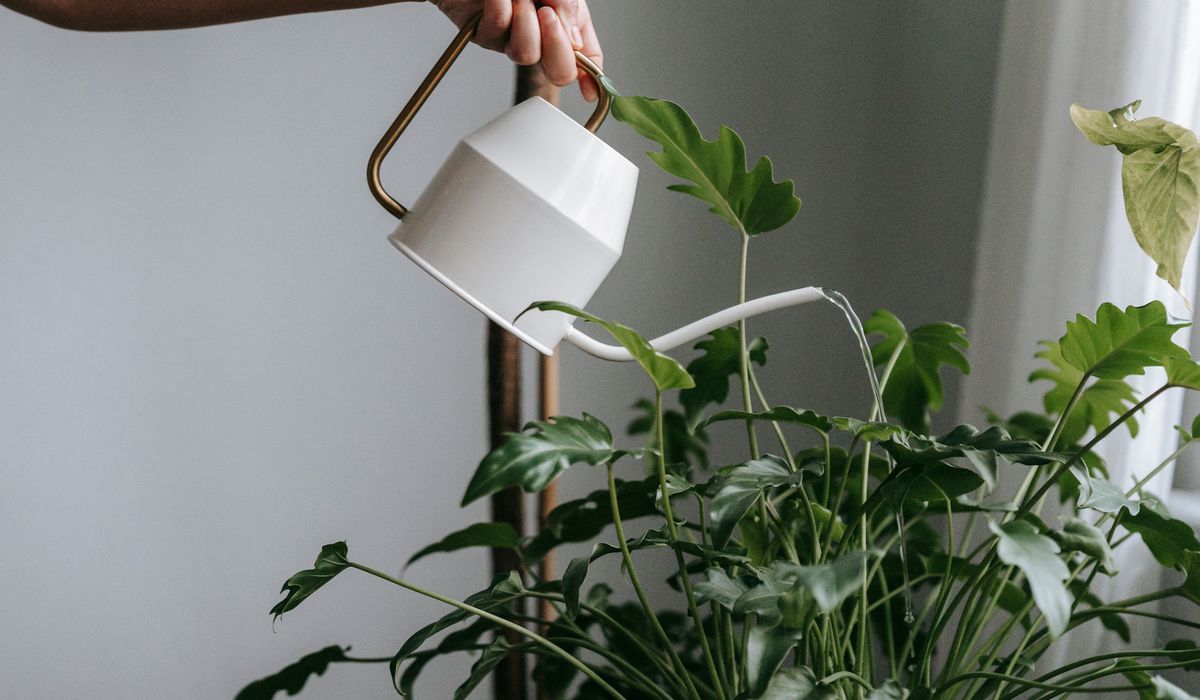
This is the single most effective thing you can do. Before watering, push a finger two or three centimetres into the compost. If it feels cool and damp, wait. Get into the habit of lifting the pot instead — a well-watered pot feels noticeably heavier than a dry one, and after a few weeks you will judge it by weight alone.
When you do water, water from below. Stand the pot in a tray or bowl with a few centimetres of water for twenty to thirty minutes, then lift it out and empty the tray. The roots get what they need while the surface stays dry, which is exactly what the gnats do not want. Stop misting your plants generally — it raises humidity around the compost surface without doing much for the foliage.
Some plants will not tolerate a dry surface: ferns, carnivorous plants, recently potted cuttings and seedlings. For these, water from below but be strict about not letting the compost sit wet for long, and keep the surrounding air moving with a small fan or an open window in summer.
Traps, Barriers and Biological Controls
- Yellow sticky traps are your best monitoring tool. Push the stem into the compost so the card sits horizontally just above the surface, where the adults fly. They catch flies and give you a rough count, so you can tell whether numbers are falling week on week.
- A top dressing of grit works beautifully. Spread one to two centimetres of horticultural grit, fine gravel or coarse sand over the compost. It dries out quickly and adults cannot reach the compost to lay eggs. Refresh it if you repot.
- Raw potato slices are an old-fashioned trick that still works. Press a slice onto the surface, leave it for a couple of days, then lift it out — larvae gather underneath — and bin it.
- Biological controls are effective if used properly. Nematodes, watered onto moist compost, hunt the larvae; bacterial drenches do much the same job. Apply them after a dry-down and reapply according to the packet, as one dose rarely clears a heavy infestation.
- Vinegar and soap traps offer limited value compared with sticky cards, so do not rely on them alone.
Repotting, Hygiene and Stubborn Infestations
If gnats keep returning despite your best efforts, the compost itself may be the source. Repot into fresh mix, shaking off as much of the old compost as you reasonably can and gently rinsing the roots. Scrub the pot with hot soapy water before reusing it, and bin the old compost rather than adding it to the garden or recycling it into other pots.
Clean saucers, shelves and windowsills too, as adults rest there. Give any new plant a fortnight in a separate room before it joins the collection, and check its compost surface before you buy it. With a bit of patience — and rather less watering — the yellow cards will come up nearly empty within a month, and the windowsill will be yours again.



John Doe
14 January, 2022Having no content in post should have adverse..
Chauffina Carr
10 April, 2022We use these tests all time! Killer stuff!
Jim Séchen
16 July, 2022Thanks for all the comments, everyone!