

Why Tropical Plants Struggle in British Homes
Most of the houseplants we love — monsteras, calatheas, ferns, philodendrons, prayer plants — come from warm, steamy jungles where the air is thick with moisture. In their native habitats, humidity often sits between 70 and 90 per cent. Our homes, especially between October and April, are a different world entirely. Central heating, double glazing and closed windows can push indoor humidity down to 30 or 40 per cent, which is roughly as dry as a desert.
The telltale signs are easy to spot once you know what to look for: crisp brown edges, curling tips, new leaves that emerge stuck or torn, and buds that drop before they open. The plant is not necessarily dying — it is simply losing water through its leaves faster than its roots can replace it. Raising the humidity around your plants is one of the kindest things you can do for them, and it need not cost a penny.
Group Your Plants Together
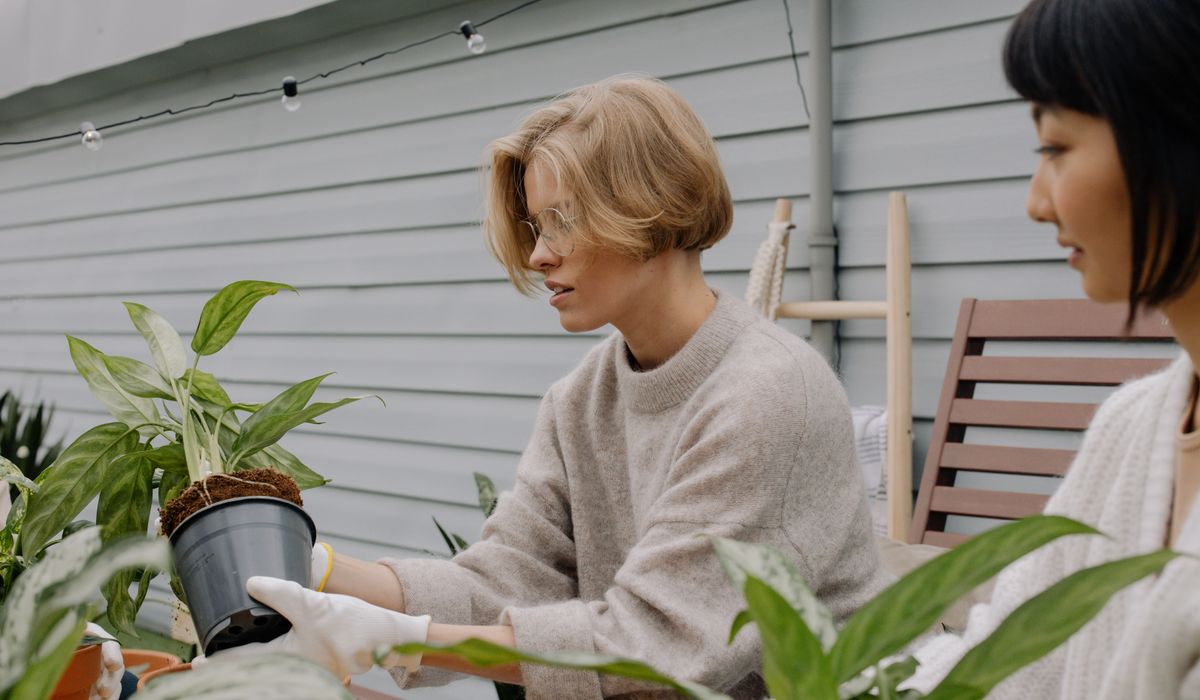
The simplest trick in the book is also one of the most effective: cluster your plants. Every leaf releases water vapour through a process called transpiration, so a group creates its own little microclimate. A single monstera on a windowsill might raise the humidity around itself by a fraction, but six or seven plants grouped closely together can lift the ambient humidity by 10 to 20 per cent in the immediate area.
You do not need to cram them shoulder to shoulder. Aim for leaves that nearly touch but still allow air to circulate, otherwise you risk fungal problems and pests. A crowded shelf or a tight arrangement on a side table both work beautifully. The effect is strongest in a small room, which is why a bathroom windowsill or a snug bedroom corner can become a genuine haven for ferns and calatheas.
Make Friends with Pebble Trays
Pebble trays are the classic low-tech solution, and still one of the best. Fill a shallow tray or saucer with a layer of small stones, add water until it sits just below the top of the pebbles, then stand your pot on top. As the water evaporates, it raises the humidity in the air immediately around the plant.
The golden rule is that the bottom of the pot must never sit in the water, or you will trade dry air for root rot. Check the tray every few days and top it up — in a warm room, a tray can dry out surprisingly quickly. Group several trays together and you multiply the effect. A cluster of ferns on a pebble tray arrangement is about as close as you can get to a rainforest shelf without a humidifier.
Keep Plants Away from Radiators and Draughts
This is the single most important thing you can do in a British home. Radiators, wood burners and underfloor heating all strip moisture from the air, and a plant sitting directly above a radiator is being blasted with hot, dry air all day. Move it even a metre or two away and you will notice a difference within a week.
The same applies to other drying influences:
- Open windows on cold, windy days, which pull moisture straight out of the room
- Dehumidifiers and air conditioning units, which are designed to remove water from the air
- Draughty hallways and porches, where air moves quickly and humidity rarely builds
- Directly beside televisions, games consoles and other heat-generating appliances
A plant in a warm, still, sheltered spot will hold far more moisture around its leaves than one in a draughty, overheated corner. If you must keep one near a radiator, a screen or shelf that deflects the rising heat will help.
Use Bathrooms and Kitchens to Your Advantage
Two rooms in the average British home are naturally humid: the bathroom and the kitchen. Steam from showers, baths, kettles and cooking creates a free humidity boost that many tropical plants adore. A fern or a spider plant on a bathroom windowsill, provided the light is decent, will often thrive with far less fuss than one in a dry sitting room.
Just be sensible about it. Plants in a bathroom still need light, and a windowless room with no natural daylight will leave even the toughest specimen struggling. In the kitchen, keep plants away from the hob and out of the path of steam from boiling pans, which can scorch leaves. If you are lucky enough to have a bright bathroom, it can become the best spot in the house for your most demanding humidity lovers.
Small Daily Habits That Make a Difference
Beyond grouping, pebble trays and radiator avoidance, a few small habits add up over time.
- Mist in the morning rather than the evening, so leaves have time to dry before cooler night temperatures arrive
- Use a fine spray and aim at the air around the plant rather than soaking the leaves, which can encourage fungal spots
- Water thoroughly but less often, as consistently moist compost helps maintain humidity around the plant
- Stand a small bowl of water near a radiator to evaporate and gently humidify the room
- Wipe leaves with a damp cloth to remove dust and give an instant moisture boost
None of these steps requires specialist kit. Tropical plants are forgiving once their basic needs are met, and humidity is often the missing piece. Try grouping a few together on a pebble tray, shift them away from the nearest radiator, and watch how quickly those crisp brown edges give way to glossy, happy new growth.



John Doe
14 January, 2022Having no content in post should have adverse..
Chauffina Carr
10 April, 2022We use these tests all time! Killer stuff!
Jim Séchen
16 July, 2022Thanks for all the comments, everyone!