

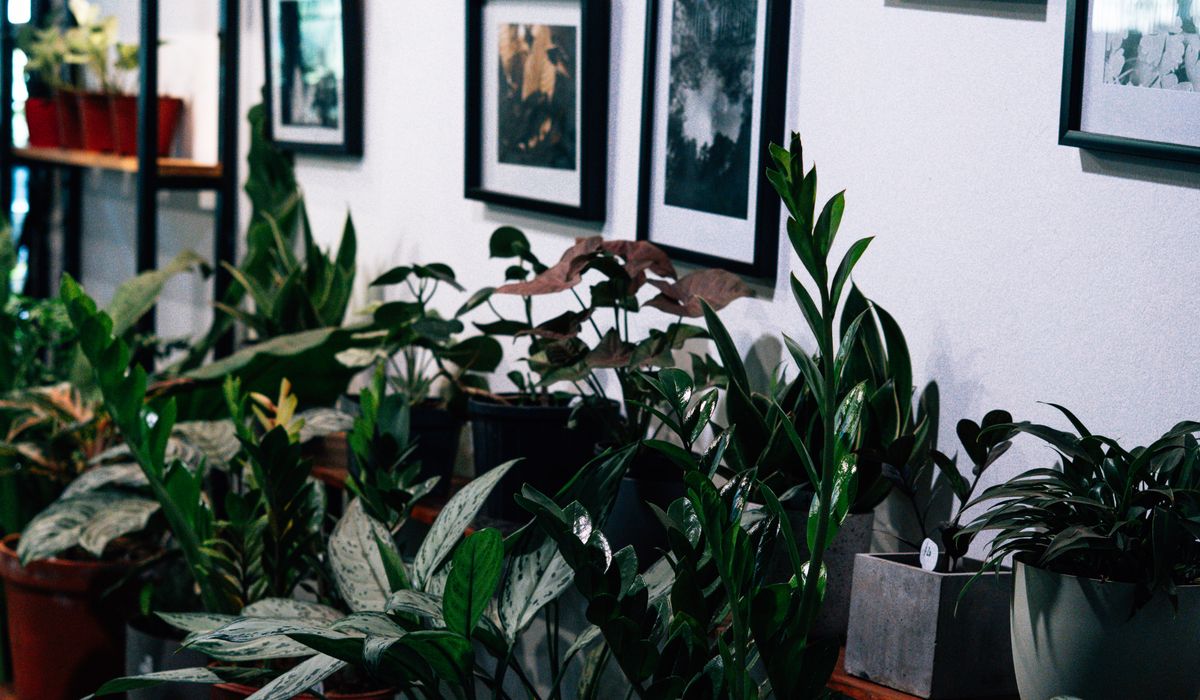
Know What You Are Dealing With First
Pests rarely announce themselves. By the time you notice something, a colony has often been quietly multiplying for weeks. The good news is that most indoor infestations are manageable with patience and a few household staples, long before you need to think about harsh chemicals.
Make a habit of inspecting plants every time you water them. Turn a few leaves over, check the joints where stems meet leaves, and look at the surface of the compost. Four things tell you something is wrong: sticky residue on leaves or windowsills, pale stippling or mottling on foliage, fine webbing around leaf axils, and tiny insects that move when you disturb the pot. Once you know which pest you have, the treatment becomes far more straightforward.
Whatever you find, move the affected plant away from the rest of your collection straight away. Most of these pests travel by crawling or by short hops between touching leaves, and a week of isolation saves a great deal of work later.
Fungus Gnats: The Little Black Flies Over Your Compost
Fungus gnats are the small, dark, slow-flying insects that rise up when you water. The adults are harmless and mostly just irritating, but their larvae live in damp compost, feeding on fungi and decaying organic matter. In badly infested pots they can nibble at young roots and newly rooted cuttings.
The real cause is almost always compost that is staying too wet. Break the cycle by letting the top two or three centimetres of compost dry out between waterings, and water from below by standing the pot in a tray for twenty minutes. Topdress the surface with a layer of horticultural grit or sharp sand to make it less appealing for egg-laying. Yellow sticky traps will catch the adults, and a biological drench containing nematodes or the bacterium Bacillus thuringiensis israelensis will deal with the larvae without harming your plant or your pets.
Spider Mites: Small, Sneaky and Fond of Dry Air
Spider mites thrive in the warm, dry conditions of a centrally heated home, which is why they tend to appear in late winter and early spring. They are barely visible to the naked eye, but their damage is obvious: pale speckling across the upper leaf surface, a dull, dusty appearance, and eventually fine webbing that looks like a stray cobweb between leaves.
- Shower the plant in a lukewarm room or bathroom, covering the compost, to knock off a good number of mites.
- Wipe both sides of every leaf with a damp cloth or soft sponge.
- Raise humidity around the plant with a pebble tray or by grouping plants together, which makes life harder for them.
- Spray with a diluted insecticidal soap, covering leaf undersides thoroughly, and repeat every four to five days for three weeks.
That repetition matters. Soap sprays kill the mites they touch but leave the eggs untouched, so a single application rarely solves the problem. Three weeks of diligence usually does.
Mealybugs, Scale and Aphids: The Sap-Suckers
Mealybugs look like small tufts of white cotton tucked into leaf joints and along stems. Scale insects appear as brown or tan waxy bumps glued to stems and the undersides of leaves. Aphids cluster on soft new growth. All three feed on plant sap and excrete honeydew, that sticky film which often turns into black sooty mould.
For light infestations, reach for a cotton bud dipped in isopropyl alcohol and dab each insect directly. It dissolves the waxy coating and kills them on contact. A soft toothbrush works well for scale on sturdy stems. Follow up with a horticultural oil or soap spray to catch anything you missed, and check new growth weekly for a month, as these pests hide in the tightest crevices.
Prevention Beats Cure Every Time
Strong, well-grown plants shrug off pests far better than struggling ones. A few simple habits do most of the work:
- Quarantine every new plant for two to three weeks before it joins the others.
- Never overwater, and always empty saucers and decorative pots after watering.
- Keep air moving with an occasional open window, and avoid crowding plants together.
- Wipe down windowsills and saucers, and clean your secateurs and pots between uses.
- Use fresh, sterile compost when repotting, and check plants brought indoors from the garden in autumn.
Gentle Treatments Worth Keeping on the Shelf
A basic soap spray is the workhorse of natural pest control. Add a few drops of mild washing-up liquid to a litre of lukewarm water, shake well, and spray in the evening so the plant is not sitting in strong sun. Test on a single leaf first, as some thin-leaved plants such as ferns can be scorched. Always rinse the leaves a day or two later to clear any residue.
Horticultural oils, sticky traps, and beneficial insects such as predatory mites and nematodes all have a place, and they work best alongside good growing conditions rather than instead of them. Above all, be consistent. Treat, wait, check, and treat again. With a little patience, most infestations are cleared within a few weeks, and your plants will carry on as though nothing ever happened.



John Doe
14 January, 2022Having no content in post should have adverse..
Chauffina Carr
10 April, 2022We use these tests all time! Killer stuff!
Jim Séchen
16 July, 2022Thanks for all the comments, everyone!