

Why light is the one thing you can't fake
Watering gets all the attention, but light is what actually keeps a houseplant alive. Leaves use light to make sugars through photosynthesis, and the amount they receive determines how fast they grow, how compact they stay and how well they cope with the odd missed watering. A plant sitting in genuinely low light will not simply grow more slowly — it will weaken, stretch towards the nearest window, drop older leaves and become far more vulnerable to pests and root rot.
The good news is that light is also the easiest thing to assess once you know what you're looking for. You don't need expensive equipment. You need to know which way your windows face, how far your plant sits from the glass, and how all of that shifts through the year.
Which way does your window face?
In the UK, window direction tells you most of what you need to know about the character of the light.
- South-facing: The brightest and warmest. Strong sun for most of the day in summer, and the light reaches deep into the room. Wonderful for sun-lovers, but capable of scorching tender leaves in midsummer.
- West-facing: Gentle morning light, then a burst of hot, low afternoon sun. Great for most flowering plants, though the late sun can be surprisingly fierce.
- East-facing: Soft morning sun followed by bright but indirect light for the rest of the day. Arguably the most forgiving aspect in the country — most foliage plants thrive here.
- North-facing: Consistent, cool, indirect light with no direct sun at all. Perfectly workable, but you must choose plants that genuinely tolerate lower levels.
Two things complicate this: bay windows that catch sun from more than one angle, and net or sheer curtains, which cut light noticeably. A thin net can reduce light by a third, so factor that in when judging a spot.
Distance matters more than direction
Light falls away astonishingly quickly indoors. A plant sitting within 30 centimetres of a bright window may receive ten times the light of one a metre further back. Move it three metres into the room and, in a north-facing space, it may be living in conditions closer to a dim corridor than a garden.
Think of your room as a series of zones rather than a single space. The windowsill and the shelf beside it are the brightest spots. The floor directly in front of the window is next. The middle of the room is a different world again, and the far corner behind the sofa is the darkest place in the house.
You can boost a dim area cheaply: pale walls reflect light back onto foliage, and a mirror positioned opposite a window genuinely helps. A simple soil test with your hand works well too — hold your hand up and look at the shadow. A sharp, dark-edged shadow means bright, direct light. A soft, fuzzy one means bright indirect. No shadow at all means low light.
How the seasons change everything
The spot that suits your monstera in July may be a poor one by January. In winter, the sun sits much lower, daylight hours shrink to around eight, and grey skies do the rest. Light levels indoors can drop to a quarter of their summer peak.
Most houseplants slow down rather than stop, so adapt with them. Move sun-lovers closer to the glass between October and March, and pull them back behind a curtain in June and July when south-facing sun becomes brutal. Reduce watering to match slower growth — overwatering in low winter light is the single most common way indoor plants die.
If you keep plants in a genuinely dark corner, a small grow light on a timer for six to eight hours a day is a practical, inexpensive solution rather than a sign of defeat.
Matching plants to the spots in your home
Once you know your light levels, choosing becomes straightforward.
- Bright, direct sun (south or west windowsill): cacti, echeveria and other succulents, jade plant, aloe vera, flowering geraniums.
- Bright, indirect light (east window, or a metre back from a south window): monstera, rubber plant, spider plant, string of hearts, most orchids.
- Medium light (a couple of metres from a bright window): pothos, philodendron, peace lily, Chinese evergreen.
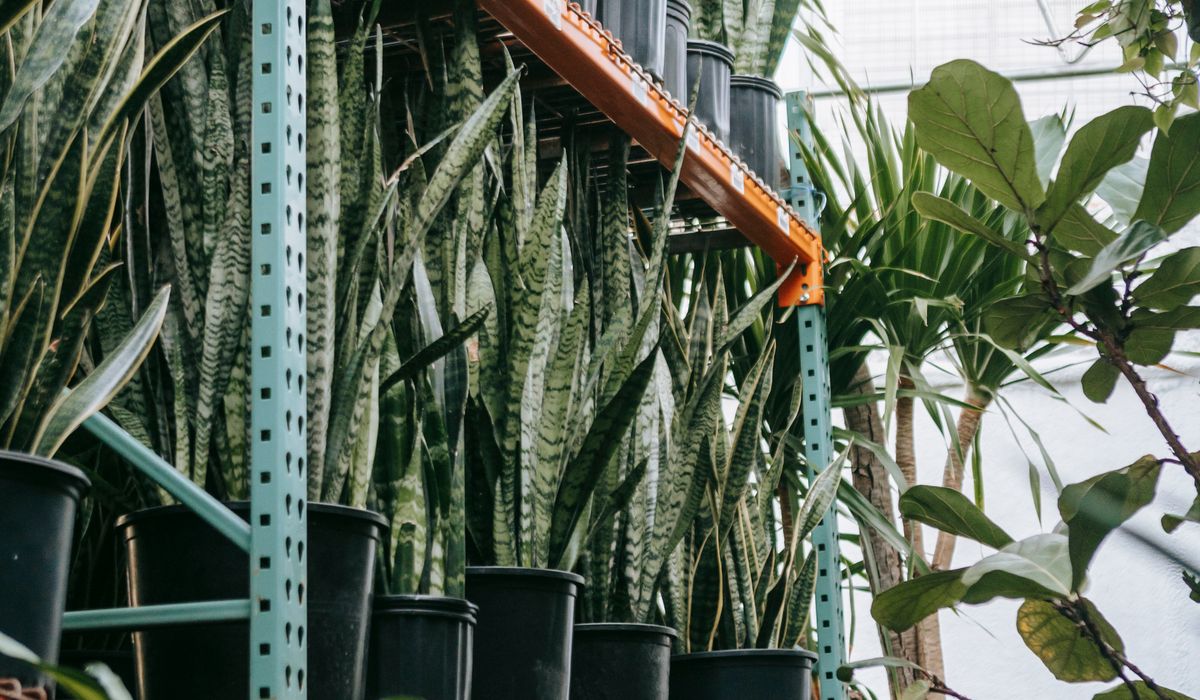
- Low light (north window, hallway, or an interior corner): snake plant, ZZ plant, cast iron plant, heartleaf philodendron. These will survive, but even they prefer a little more light than most people give them.
Bathrooms and kitchens are a special case: often dim, but humid, which suits ferns, spider plants and pothos beautifully.
Reading the signs that light is wrong
Your plants will tell you long before they die. Long, thin stems with wide gaps between leaves, small pale new growth and a distinct lean towards the window all mean too little light. Move the plant closer by stages rather than all at once, and rotate it a quarter turn each week so it grows evenly.
Bleached, washed-out patches, crisp brown edges and leaves that feel hot to the touch point the other way — too much direct sun. A sheer curtain is often all the fix you need.
Get the light right and everything else becomes easier. Feeding, watering and repotting all make sense once the plant has enough energy to use them.




John Doe
14 January, 2022Having no content in post should have adverse..
Chauffina Carr
10 April, 2022We use these tests all time! Killer stuff!
Jim Séchen
16 July, 2022Thanks for all the comments, everyone!