

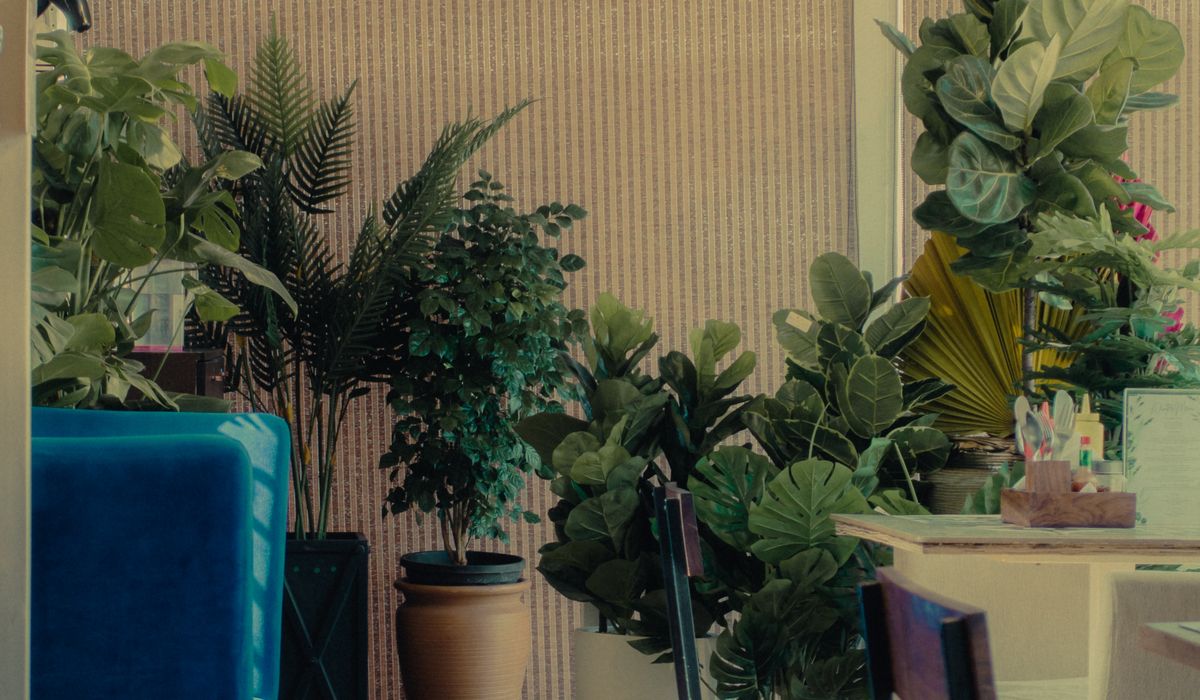
Why trailing plants earn their place on open shelves
Open shelving gives you something a windowsill rarely does: height. A trailing plant sitting on a top shelf can send growth down past two or three levels, softening the hard lines of timber or metal and drawing the eye around the room. It also puts your plants at eye level, which means you spot a dry pot or a pale leaf long before you would if the same plant were tucked away on the floor.
The trick is to treat the shelf as a single living arrangement rather than a row of unrelated pots. Match each trailer to the light that spot actually receives, then arrange by leaf shape and habit so the whole unit reads as one display instead of a jumble.
Three reliable trailers
These three cover most situations and cope well with the dry air of centrally heated British homes.
- Ivy (Hedera helix). Fine, lobed leaves and a dense, cascading habit that fills a gap quickly. It wants bright, indirect light and is happy on an east or north-facing shelf. Keep the compost evenly moist but never sodden, and check the undersides of the leaves for spider mite if the room is warm and dry.
- Pothos (Epipremnum aureum). Heart-shaped leaves on long, forgiving stems, and the easiest of the three to please. Bright, indirect light keeps the gold or cream variegation sharp, though it will tolerate a metre or two back from a window. Let the top 2–3cm of compost dry out before watering.
- String of pearls (Curio rowleyanus). Round beads strung on fine threads, and stunning against a plain wall. It needs the brightest position you have: a south or west-facing shelf with several hours of direct sun. Use a gritty, free-draining compost, water sparingly, and cut back further in winter.
Arranging by leaf shape and shelf height
Contrast does the work here. Set fine-leaved plants such as ivy or string of pearls beside something bold and rounded like pothos, and the texture of both stands out far more than if you lined up three similar plants in a row. Odd numbers tend to look more natural than pairs, so three or five pots across a shelf usually sits better than four.
Place trailers at the outer edge of the shelf rather than in the middle, so the growth falls freely instead of tangling with its neighbours. If you have three shelves, put the longest trailers on the top, medium-length plants on the middle, and small upright plants at the base so the eye travels downwards. Anything on the bottom shelf needs to be comfortable with the least light, and it should not be a trailer — there is nowhere for it to go.
Pots, liners and drips
Timber shelves and water do not mix. Keep every plant in a plastic nursery pot and slip that into a decorative outer pot, then lift the inner pot out to water at the sink and let it drain properly before returning it. This one habit prevents most shelf damage. Add a sticky felt pad or cork coaster underneath each outer pot to catch the last stray drip and to stop scratches when you slide things around.
Choose pots a little smaller than seems generous. Most trailers prefer to be slightly snug at the roots, and a smaller pot also dries out faster, which suits pothos and string of pearls well. If a pot looks bottom-heavy on a narrow shelf, weigh it down with a couple of stones on the compost surface.
Keeping trails full, tidy and well lit
Trailing plants tend to grow towards the light, so give each pot a quarter turn every fortnight. Pinch out the growing tips in spring and early summer to encourage side shoots rather than one long, straggly stem. When a trail gets too long, cut it back — the cuttings root readily in a glass of water and can be potted up to fill out the mother plant or start a new one.
You can guide growth with small clear adhesive clips along the shelf edge, training a stem sideways rather than straight down. That keeps shelves looking deliberate and stops long trails swinging into walkways.
Light is the deciding factor, not the pot or the styling. A shelf facing a window can be two or three times brighter than one on the opposite side of the same room, so shuffle pots if you see pale, stretched growth or a pothos losing its markings. Water according to the shelf, too: plants in a bright, warm spot dry out far quicker than those in a shaded corner. Feed with a dilute liquid fertiliser every few weeks from March to September, then ease off entirely until spring.
One last note for pet owners: ivy, pothos and string of pearls are all irritant if chewed, so keep shelves either well above a cat's reach or behind a closed door.





John Doe
14 January, 2022Having no content in post should have adverse..
Chauffina Carr
10 April, 2022We use these tests all time! Killer stuff!
Jim Séchen
16 July, 2022Thanks for all the comments, everyone!